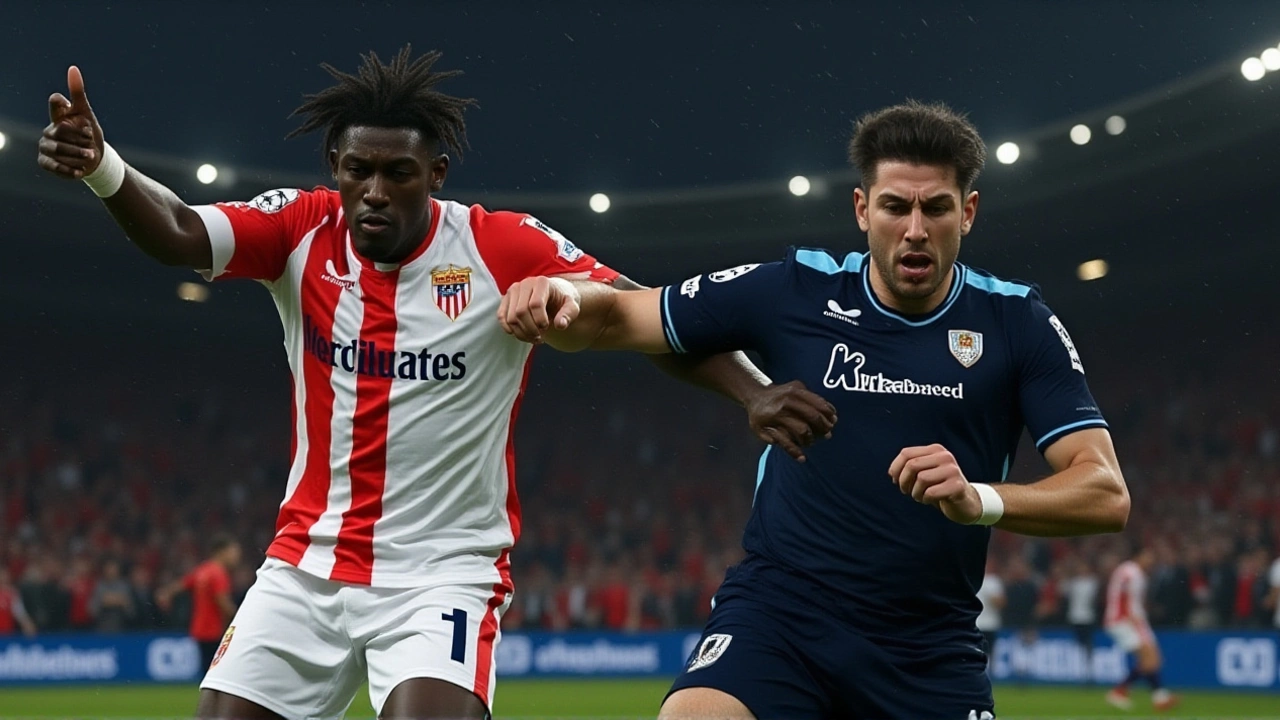
It was another quiet night at Fortuna Arena — no goals, no fireworks, just silence where fans expected thunder. SK Slavia Praha and Athletic Club played out a goalless 0-0 draw on November 25, 2025, in a UEFA Champions League League phase match that felt more like a funeral procession than a contest. The final whistle blew after 94 minutes, leaving Slavia Prague with zero goals in their last five European games and still searching for their first win in this season’s competition. For a team that once punched above its weight in continental football, this is becoming a haunting pattern.
The Drought That Won’t End
Slavia Prague’s scoring drought now stretches to 450 consecutive minutes in the Champions League — over seven full matches without finding the net. That’s not just bad luck. It’s systemic. The team has scored just two goals in five group stage games this season, while conceding eight. Their position at 30th in the standings — with three draws and two losses — puts them on the brink of elimination. With only one match left, they need a miracle. And miracles don’t come to teams that can’t finish chances.
Manager Jindřich Trpišovský has tried everything: formations, substitutions, pressing schemes. Nothing sticks. His side dominated possession in the first half but couldn’t turn it into shots on target. When they did get into dangerous areas, the final pass was too heavy, the shot too tame. It’s not a lack of talent — M. Chytil, their best attacker, was replaced in the 79th minute after another quiet night. It’s a collapse of confidence.
Athletic Club’s Gritty Grind
For Athletic Club, this was a point earned, not a gift given. Under Ernesto Valverde, the Basque side played with the discipline of a team that knows it’s fighting for survival. Their two consecutive away draws in the Champions League — both 0-0 — have kept them alive. They sit at 28th place with four points, just one ahead of Slavia, but with a slightly better goal difference. Still, their attack has sputtered too: only one goal in five games.
Key moments came in flashes. In the 19th minute, G. Guruzeta clashed with a Slavia defender after a rough tackle, sparking a brief but heated exchange. Then, in the 85th, A. Paredes erupted after a controversial foul call — his frustration mirrored his team’s season. Valverde, ever the calm presence, barely moved on the sideline. He knows this isn’t about flair. It’s about grit. And right now, grit is all they’ve got.
The Numbers Don’t Lie
StatMuse’s data paints a brutal picture. Slavia Prague has now gone 450 minutes without a goal in the Champions League — the longest active drought in the 2025/26 season. Their record: 0 wins, 3 draws, 2 losses. Their last victory in Europe? Over a year ago. Meanwhile, Athletic Club’s away record in this competition stands at two draws, two losses, and one win — a pattern of barely scraping by.
The substitutions in the 79th minute told their own story. Chytil off. Lekue off. Gómez off. All signs of desperation, not strategy. No one wanted to be the one who lost it. The game ended with a foul by I. R. d. Galarreta in the third minute of stoppage time — a final act of frustration from a team that’s lost its rhythm.
What Comes Next?
Slavia Prague’s fate hinges on their final matchday — a home game against a stronger opponent. Even a win won’t be enough unless other results go their way. They need at least two teams ahead of them to drop points, and even then, their goal difference is a mountain to climb. For Athletic Club, the dream is slimmer: they need to beat the team currently in 27th place and hope Slavia collapses.
Their next match is scheduled for early December 2025. But what happens between now and then matters more than the fixture list. Can Slavia’s young midfielders find belief? Can Athletic’s veterans rediscover their edge? These aren’t just tactical questions — they’re psychological ones.
A Legacy in Jeopardy
Fortuna Arena, with its 19,000-seat roar, was eerily quiet after the final whistle. This isn’t just about Champions League points. It’s about identity. Slavia Prague used to be the pride of Czech football — a regular in European knockout rounds. Now, they’re barely clinging to relevance. And for a club that once produced world-class talent, this drought feels like a slow unraveling.
The YouTube highlights video for the match, titled ‘Slavia Prague - Athletic Bilbao | 0-0 | Highlights | Champions League 2025-26 | Slavia Athletic,’ had just 416 views three hours after upload. That’s not just a reflection of the match’s dullness — it’s a sign that the world has stopped watching.
Frequently Asked Questions
Why has Slavia Prague failed to score in five Champions League matches?
Slavia Prague’s scoring issues stem from a combination of poor final-third execution, defensive pressure from opponents, and a lack of clinical finishers. Their top scorer this season has only two goals in all competitions, and midfielders like Chytil are being marked out of the game. The team has also lost its traditional attacking rhythm since key players left in 2023.
Can Athletic Club still qualify for the knockout stage?
Yes, but barely. Athletic Club needs to win their final match and hope that at least two teams ranked above them — including Slavia Prague — lose. Even then, their goal difference (-5) is a major hurdle. They’ve drawn three of their last four games, which keeps them alive but doesn’t inspire confidence. Their defense has held up, but their attack has been toothless.
How does this result affect Czech football’s reputation in Europe?
This result deepens concerns about Czech clubs’ ability to compete in Europe’s elite. Slavia Prague, once a regular in the Champions League knockout rounds, now struggles to stay relevant. Their lack of goals and defensive fragility reflect broader issues in the Czech league — limited investment, fewer top-tier signings, and weak youth development pipelines compared to Western Europe.
What’s the significance of the 450-minute goalless streak?
A 450-minute goalless run in the Champions League is among the worst in modern history for a team that’s reached the group stage. Only two clubs in the last decade have gone longer without scoring in the competition — both were eliminated early. This isn’t just bad form; it’s a systemic failure that could cost Slavia Prague their place in future European competitions due to coefficient penalties.
Who were the key players in the match, and why didn’t they make a difference?
M. Chytil for Slavia and G. Guruzeta for Athletic were the most dangerous, but both were tightly marked. Chytil had only one shot on target, while Guruzeta’s early argument disrupted his rhythm. Neither had support from midfield. The lack of creativity from the center — especially from Slavia’s midfield trio — meant chances were few and far between. No player had more than 30 touches in the final third.
Why were there so many arguments during the match?
The tension came from frustration — both teams knew this was a must-win situation in all but name. Slavia needed a win to stay alive; Athletic needed a point to keep their hopes alive. Refereeing decisions were tight, with no red cards but several borderline fouls. Arguments by Paredes and Guruzeta reflected the pressure of knowing their Champions League futures could hinge on this single match.