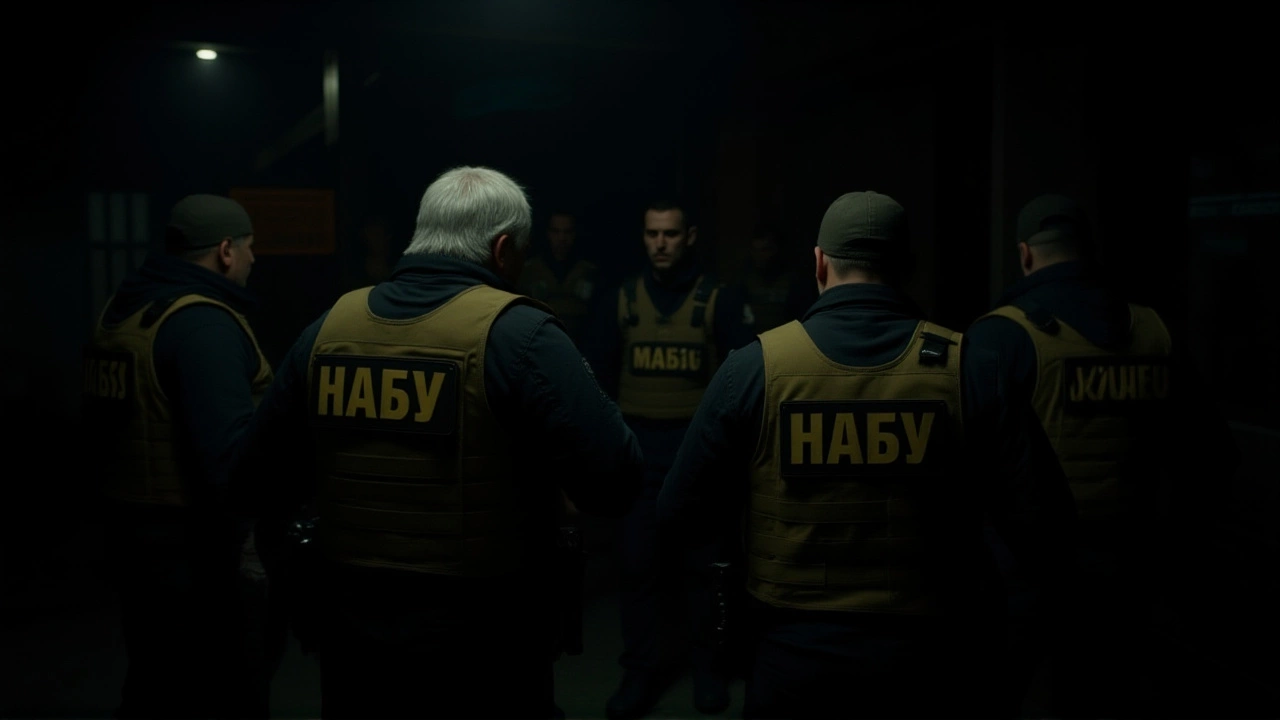
On November 28, 2023, investigators from Ukraine’s National Anti-Corruption Bureau (NABU) raided the office of Andriy Borisovich Yermak, President Volodymyr Zelenskyy’s chief of staff, and his private apartment on Bankova Street in Kyiv. The searches, conducted alongside the Specialized Anti-Corruption Prosecutor's Office, marked a seismic moment in Ukraine’s war-era politics — not because of the raid itself, but because of who was targeted. Yermak, 51, had been Zelenskyy’s most trusted aide since December 2019, effectively running the presidency behind the scenes. Now, he was at the center of Ukraine’s biggest corruption case since Zelenskyy took office: the Energoatom scandal.
The Energoatom Scandal: A Power Plant, a Pyramid Scheme
The investigation centers on Energoatom, Ukraine’s state-owned nuclear utility that operates all four of the country’s nuclear power plants — including the Zaporizhzhia plant, seized by Russian forces in March 2022. Investigators allege a multi-year scheme involving inflated contracts, shell companies, and kickbacks worth tens of millions of dollars. Eight people have already been formally charged, including Timur Mindich, a Ukrainian businessman described by NABU as a "close associate of the president." But whispers inside law enforcement pointed higher. One source told the Kyiv Independent that investigators had quietly nicknamed Yermak "Ali Baba," referencing the legendary tale of hidden treasure — a coded reference, they said, to luxury properties allegedly acquired through illicit means."Full Cooperation" — But Charges Coming Soon
Yermak didn’t resist. In a Telegram post during the raids, he wrote: "Today, the NABU and SAPO are indeed carrying out procedural actions at my home. The investigators are facing no obstacles. They have been given full access to the apartment, and my lawyers are present on site and are cooperating with law enforcement. I am providing full cooperation on my part." His tone was calm, even defiant — but the timing told another story. Hours after the searches began, a law enforcement insider confirmed to the Kyiv Independent that formal charges against Yermak were being drafted, specifically tied to luxury real estate transactions. "Expect charges very soon," the source said. The fact that Yermak was still technically in office during the raids — and that NABU didn’t wait until after his resignation — suggests prosecutors were moving deliberately, building a case that could withstand political pressure.Resignation: A Strategic Retreat or Forced Exit?
Within hours of the searches, President Zelenskyy announced Yermak’s resignation. The statement was brief: "Andriy Yermak has submitted his resignation. I accept it." No explanation. No praise. No farewell. That silence spoke volumes. Yermak had been more than a chief of staff; he was Zelenskyy’s fixer, negotiator, and gatekeeper. He’d managed everything from wartime diplomacy to media spin. His influence stretched into the judiciary, defense procurement, and even cultural projects. His fall wasn’t just a personnel change — it was a fracture in the inner circle. Some saw resignation as a tactical move — a way to protect Zelenskyy’s image before charges were filed. Others believed Yermak was pushed out. Either way, the message was clear: even the most powerful figures in Ukraine are not above the law. Or at least, not above the law when the public — and Western donors — are watching.Why This Matters Beyond Kyiv
Ukraine’s survival depends on foreign aid. The U.S., EU, and IMF have tied billions in funding to anti-corruption reforms. The Energoatom case isn’t just about stolen money — it’s about trust. If the president’s closest ally is implicated in looting a critical energy monopoly during wartime, how can Kyiv convince donors it’s serious about reform? The EU’s 2023 financial package included a €50 billion aid package contingent on judicial independence and corruption crackdowns. The IMF’s $15.6 billion standby arrangement requires proof that top officials are being held accountable. This case also exposes the tension between wartime urgency and institutional integrity. In 2022, Zelenskyy suspended dozens of corruption investigations to focus on defense. But by late 2023, the tide had turned. With Russian advances stalled and Western fatigue growing, Kyiv needed to prove it could govern as well as it could fight. The raid on Yermak’s apartment wasn’t just a legal action — it was a political signal. To Brussels. To Washington. To Ukrainians who’ve watched their country bleed for two years.
What Comes Next?
Yermak’s successor, Denys Shmyhal, the former prime minister, was named interim chief of staff. But the real question isn’t who replaces Yermak — it’s whether NABU will follow through. Will charges be filed? Will Mindich’s network be dismantled? Will documents from Yermak’s apartment lead to higher-level figures? The investigation is still active, and sources say prosecutors are reviewing encrypted communications and offshore property records. One thing is certain: if charges are dropped or delayed, Ukraine’s credibility with its allies will suffer a blow harder to recover from than any battlefield loss.Background: The Rise and Fall of a Political Insider
Before he was chief of staff, Yermak was a film producer and lawyer. He co-founded a media company that produced pro-Zelenskyy content during the 2019 election. His rise was meteoric — and controversial. Critics accused him of using his position to benefit allies in the entertainment and energy sectors. He never held elected office, yet he controlled access to Zelenskyy. That made him both indispensable and vulnerable. His resignation leaves a power vacuum. And in wartime Ukraine, vacuums are filled fast — by allies, rivals, or foreign actors.Frequently Asked Questions
What specific allegations are being made against Andriy Yermak?
Investigators are focusing on alleged involvement in a scheme tied to luxury real estate purchases, likely funded through kickbacks from inflated Energoatom contracts. While no formal charges were filed at the time of the November 28, 2023 searches, law enforcement sources indicated charges were imminent, specifically related to properties valued at over $2.3 million linked to shell companies tied to Energoatom contractors.
Why is the Energoatom case so significant for Ukraine’s international support?
Western donors, including the IMF and EU, have tied over $65 billion in financial aid to demonstrable anti-corruption progress. The Energoatom scandal — involving Ukraine’s critical nuclear infrastructure — directly undermines that credibility. If top officials are implicated, aid packages could be paused, jeopardizing Ukraine’s ability to pay soldiers, repair energy grids, and rebuild cities.
How does this case compare to past corruption scandals in Ukraine?
Previous cases, like the 2014-2016 "Gas Wars" or the 2020 Kyivstar scandal, involved mid-level officials. This is the first time a sitting chief of staff — the second most powerful person in government — has been investigated during wartime. The scale of alleged fraud in Energoatom, estimated at $300 million over five years, also dwarfs prior cases. It’s the most serious corruption probe since Ukraine’s 2014 revolution.
What role did Timur Mindich play in the Energoatom case?
Mindich, a Ukrainian businessman with ties to the energy sector, has been formally charged as the alleged ringleader of the corruption network. He reportedly controlled shell companies that won no-bid contracts with Energoatom, then funneled payments through offshore accounts. Investigators believe he coordinated with senior officials — including Yermak — to approve contracts and shield transactions from audit.
Is there evidence linking President Zelenskyy to the corruption?
No direct evidence has been presented linking Zelenskyy to the scheme. His office has repeatedly denied any knowledge of wrongdoing. However, critics argue that his long-standing reliance on Yermak — who reportedly controlled appointments and contract approvals — created an environment where corruption could flourish unchecked. The president’s decision to accept Yermak’s resignation was seen as damage control, not admission of guilt.
What happens to Ukraine’s anti-corruption institutions now?
NABU and the SAPO have gained credibility with this investigation, but their independence remains fragile. The next challenge is ensuring they’re not politically neutered after Yermak’s exit. Western advisors are urging Ukraine to appoint a new prosecutor general with no ties to the current administration — a move that could either strengthen reforms or trigger a backlash from entrenched interests.